
Safer Internet Day 2026: Spotting Digital Predators & Empowering Youth
Mark your calendar for February 10, 2026!
Each February, Safer Internet Day brings together communities across the world to promote safer, more respectful digital spaces. Mark your calendar for February 10, 2026! Its mission is simple yet critical: ensure that young people can explore, learn, and connect online without facing manipulation, exploitation, or harm.

Social media, gaming platforms, and messaging apps all provide easy pathways for abusers to build trust, isolate youth, and exploit vulnerabilities. This month, we’re focusing on how adults working with youth can recognize the warning signs and equip young people with the knowledge and tools to stay safe. We at TYAN do not specialize in digital safety, but we have compiled the vital resources from those that do.
We have included tips for working individually with youth but also resources on how to incorporate digital safety into your program. Read the blog until the end to see how one of our community partners is taking a positive approach to digital literacy and engagement.
Warning Signs for Adults to Watch
Predators use a variety of evolving tactics to manipulate youth online including manipulative grooming, fake profiles and impersonation, and extortion.
Youth often hide concerning online interactions out of fear, shame, or uncertainty. Adults working with youth should stay alert for:
- Withdrawal from offline relationships or increased secrecy
- Sudden gifts, money, or unexplained items
- Shifting conversations from public platforms to private or encrypted apps
- Increased anxiety or distress tied to digital communication.
Check out the OJP’s Online Safety Guide.
Practical Tips for Youth & Adults
Do: 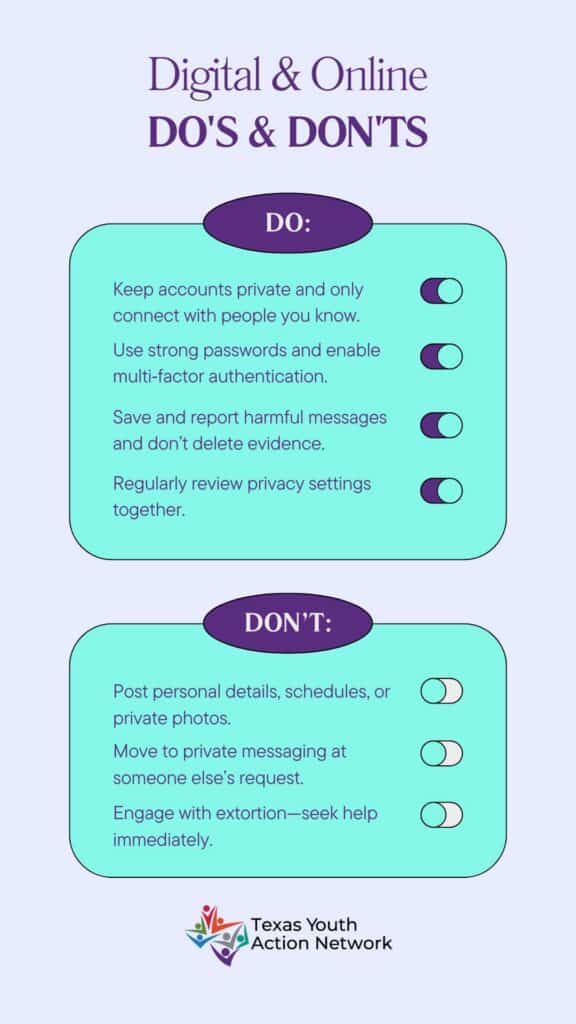
- Keep accounts private and only connect with people you know.
- Use strong passwords and enable multi‑factor authentication.
- Save and report harmful messages and don’t delete evidence.
- Regularly review privacy settings together.
Do NOT:
- Post personal details, schedules, or private photos
- Move to private messaging at someone else’s request.
- Engage with extortion—seek help immediately from local law enforcement.
Download TYAN’s Digital Do’s & Don’ts Sheet for youth.
How to Respond & Report Concerns
Swift reporting can interrupt exploitation and protect youth. Report and take action immediately via:
- Local law enforcement
- ICAC offers sextortion guides, reporting flowcharts, and step‑by‑step guidance for adults working in youth development.
- NCMEC “Take It Down” tool: helps remove explicit images of minors.
Tools for Youth Programs
These free, research‑based resources support schools, YAP programs, mentoring programs, and adults working with youth in a wide array of capacities.
- Childhelp + Meta – “Staying Safe from Online Harm” provides facilitator‑led lessons on grooming, sextortion, boundaries, and reporting.
- Shared Hope Internet Safety Toolkit offers handouts, app guides, and conversation starters for adults and caregivers.
- NCMEC NetSmartz allows you to download slides, videos, and activities for grades K–12.
- Microsoft Education CyberSafe AI Series covers AI‑awareness modules and digital citizenship resources.
We encourage partners and adults working in youth development to incorporate internet safety curriculum into YAP programing. For more inspiration, visit Microsoft’s Safer Internet Day feature from 2025.
Community Partner Spotlight: Bridges to Science
As you explore new ways to strengthen youth’s digital safety programming, we also want to recognize partners who are doing this work in inspiring ways. This month, we’re highlighting Bridges to Science, an organization expanding STEM opportunities for young people across Texas. Through hands‑on projects and inquiry‑based learning, they help youth build digital literacy and critical‑thinking skills essential for navigating online spaces safely.
TYAN is proud to celebrate their commitment to empowering the next generation of thinkers, innovators, and safe digital citizens.
____________________________________________________________________________
Additional digital safety guidance can be found on these websites: